
Our Team
Kimberly Emmen, PLA, ASLA
Kimberly’s early years in Idaho, surrounded by mountains and rivers, instilled a deep connection to nature and a lasting curiosity about the natural world. Her appreciation for the impact outdoor spaces have on our lives, health, and well-being eventually led her to pursue landscape architecture as a way to translate that connection into meaningful design.
She left her beloved Idaho home for San Luis Obispo, California, to attend California Polytechnic State University’s Bachelor of Landscape Architecture program, the most esteemed programs West of the Mississippi. Kimberly graduated Summa Cum Laude with her BLA in 2018. She went on to gain invaluable experience working with licensed landscape architects on commercial, multi-family, and single-family residential projects throughout California’s Central Coast, from Paso Robles and San Luis Obispo to Los Osos, Morro Bay, Santa Barbara, Montecito, and Malibu.
In 2020, Kimberly founded Harmony Landscape Design in Santa Barbara, where she collaborated with licensed landscape contractors and guided homeowners from design conceptualization through construction completion. Returning to Idaho in 2026 to be closer to her growing family, Kimberly secured her Idaho Landscape Architect license and launched Ecoterra Landscape Design, a full-service landscape architecture firm dedicated to contemporary, ecological design principles.
Principal, Landscape Architect
Marcus Emmen is an assistant designer and drafting technologist from Boise, Idaho, whose love for the outdoors runs deep in both his family roots and his professional life. Growing up in the wide-open spaces of Idaho, he spent his childhood building fence lines on ranches with his grandfather and exploring Idaho’s rivers and mountains through hunting and fishing trips. Marcus’ mother made sure weekends were filled with camping trips that deepened his appreciation for the quiet beauty and balance of the natural world.
After graduating from Vallivue High School, Marcus studied Drafting Technologies at the College of Western Idaho and Cuesta College in San Luis Obispo, California. That led him to a career as a lead CAD engineer at a stone fabrication plant on California’s Central Coast, where he spent eight years refining technical precision and design sensibilities. Eventually, Marcus returned to Idaho to study biology — seeking to understand not just how to build within nature, but how to build with it.
As a vital member of our landscape architecture team, Marcus combines the precision of drafting with the artistry of the natural world. He develops landscape plans and brings designs to life with photorealistic 3D renderings. His goal is simple: to create spaces that bring people peace, connection, and a sense of calm amidst the demands of modern life. Every design is guided by a belief that landscapes are not just scenery — they are sanctuaries that remind us to slow down, breathe, and feel at home in the world around us.
Assistant Designer, 3D Specialist
Marcus Emmen

What Is Ecological Design?
Ecological design is founded on biophilic principles, creating a profound connection with nature by integrating natural elements into the spaces we use every day. In landscape architecture, that can mean thoughtful planting, natural light, outdoor access, seasonal change, and designs that respond to the land itself.
Our approach to landscape architecture acknowledges human well-being while also transforming the built environment into something more integrated to the larger ecosystem. Instead of treating nature as something to control or decorate around, ecological design asks how each space can work in harmony with it.
At its core, ecological design shifts human development from dominating the natural world to participating in it. At Ecoterra, that means creating outdoor spaces that nurtures a vital sense of belonging while giving soil, water, flora, and fauna a meaningful role in the design.
Ecological design is the foundation.
Composition is the art.

soil
Healthy soil = foundation of all life
Protect topsoil by minimizing excessive grading and tillage
Build organic matter with vermicompost, mulch and soil-supportive practices
Conserve moisture and help regulate soil temperature
Absorb stormwater and slow its movement through the landscape

water
Intelligent hydrology = resilient systems
Incorporate swales to direct and spread stormwater
Design rain gardens to capture and infiltrate runoff
Use dry creeks and dry wells to guide stormwater back into the ground
Install drip irrigation to reduce water waste
Select native and climate-adapted plants to lower long-term water demand

flora
Right plant, right place = beautiful ecosystem
Select native and climate-adapted plants to reduce synthetic fertilizer use
Create habitat for wildlife, pollinators, and beneficial insects
Improve air and water quality by helping filter pollutants
Reduce heat, erosion, and stormwater runoff
Strengthen soil health through plant diversity and nitrogen-fixing species

fauna
Habitat creation = greater biodiversity
Provide corridors for wildlife, insects, birds, and butterflies
Encourage predator-prey relationships for natural pest management (IPM)
Cultivate biodiversity above ground and healthy organisms below ground
Invite beneficial insects and pollinators back into the landscape
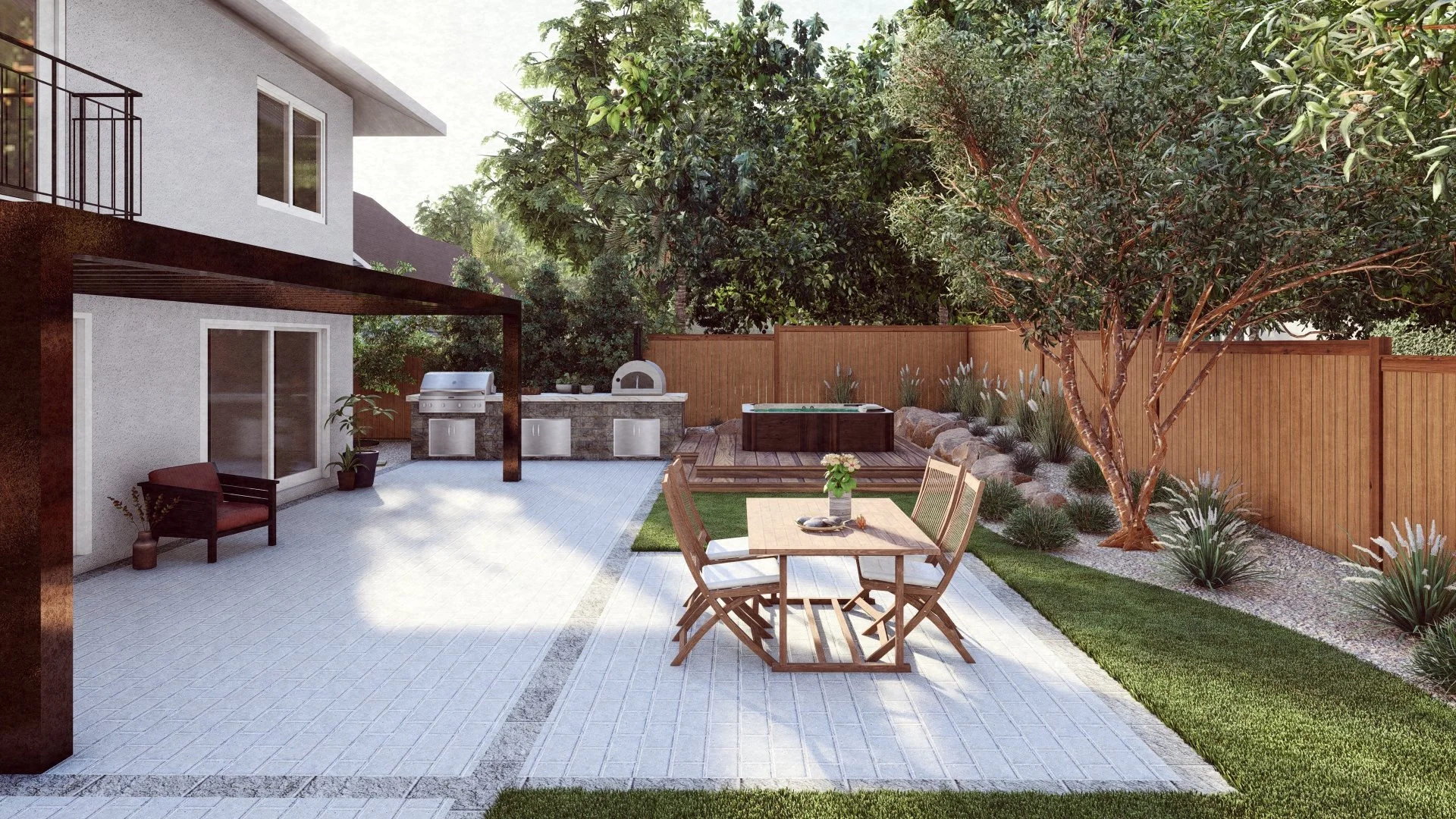
Enriching habitats
Economically sustainable
Environmentally healthy
And
…Inherently beautiful